When purchasing a press brake, many enterprises face the same question: with so many different types on the market, what exactly are the differences between them?
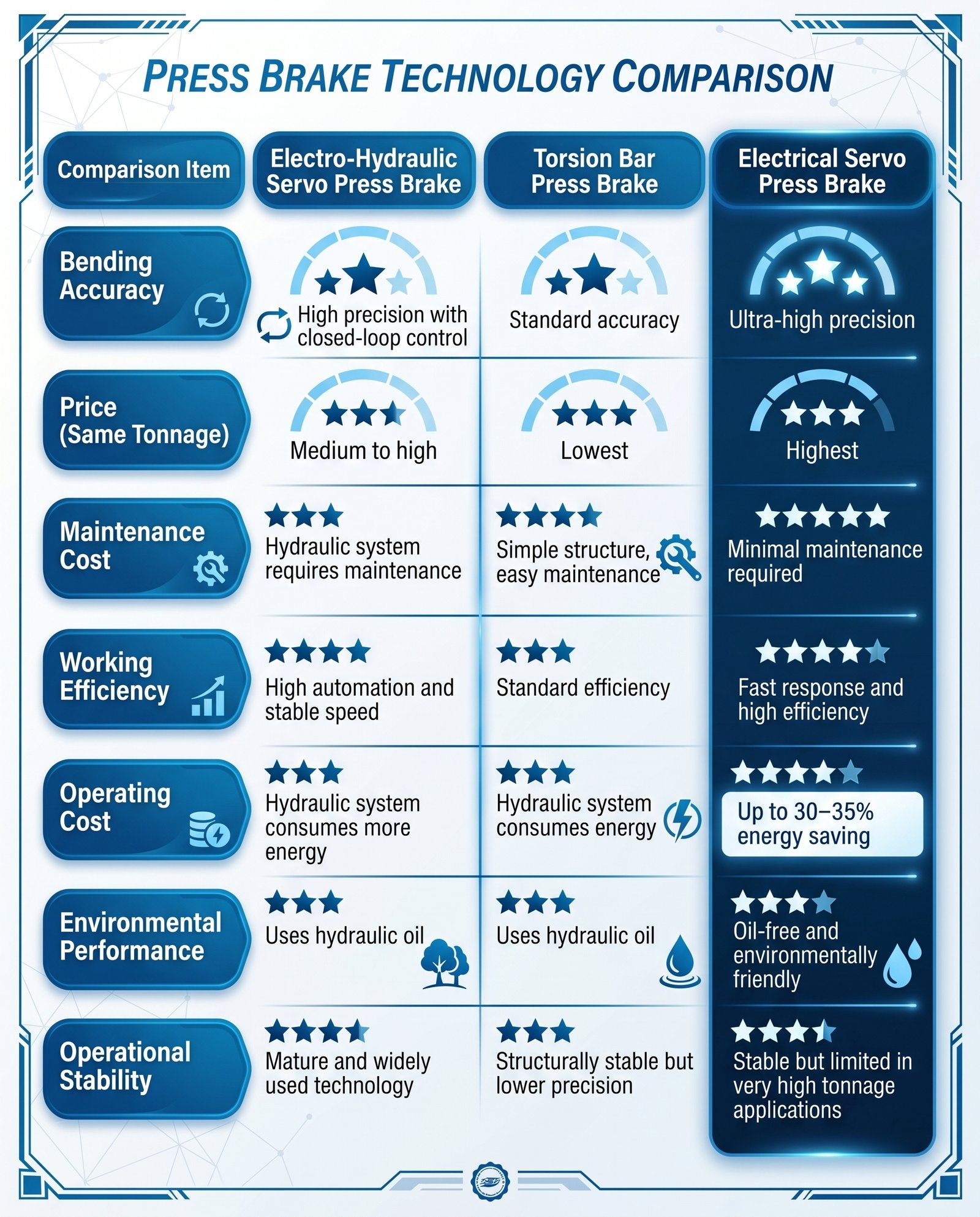
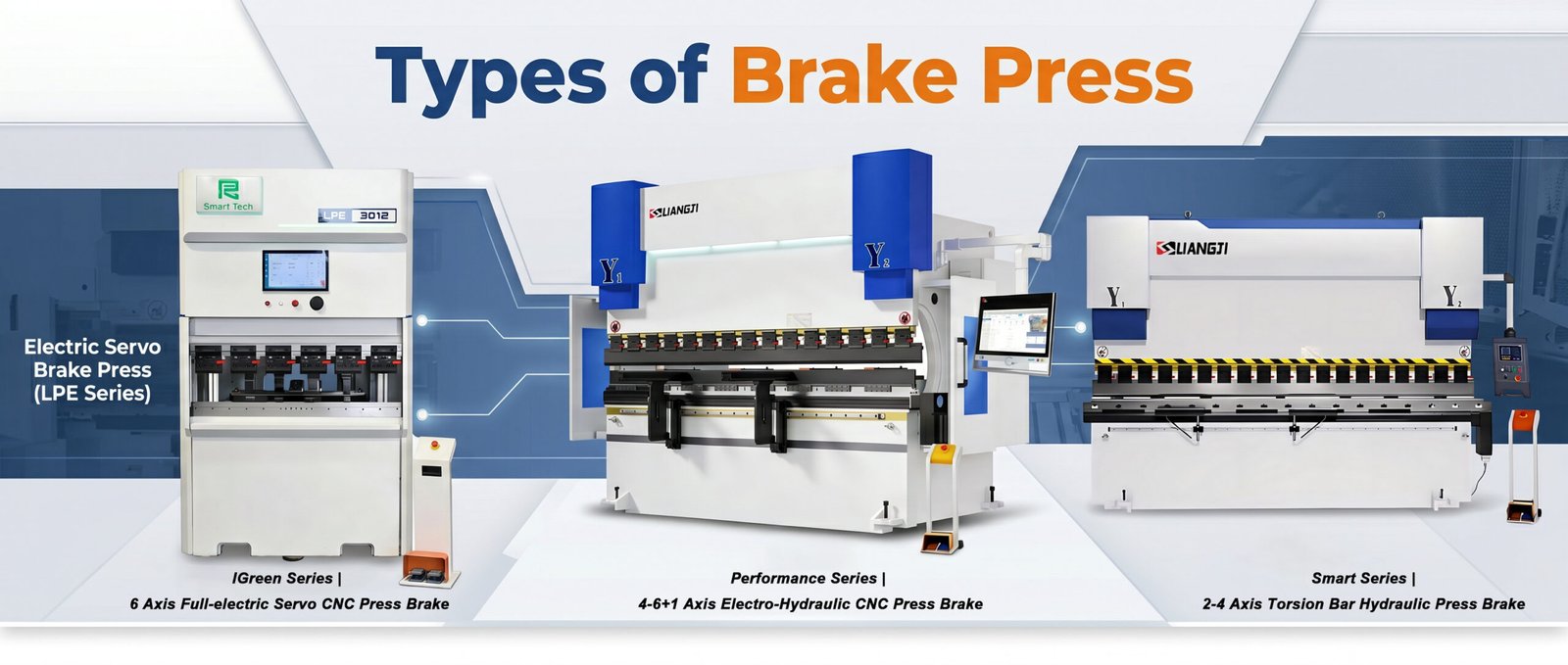
Currently, the most common types in the market include Electro-Hydraulic Servo Press Brakes, Torsion Bar Press Brakes, and Pure Electric Press Brakes. Each type has its own distinct characteristics in terms of structural principles, control precision, and application scenarios.
This article will provide a quick comparison of these three mainstream press brakes to help you choose the equipment that truly fits your factory’s needs.
1. Electro-Hydraulic Servo Press Brake
The electro-hydraulic servo press brake controls the hydraulic system via servo valves, integrating with grating scales to achieve closed-loop feedback control of the ram position. This allows for precise synchronization of the left and right cylinders. Due to its high precision and level of automation, electro-hydraulic servo press brakes are widely utilized in industries such as automotive parts, engineering machinery, and high-end sheet metal fabrication.
Common advantages of electro-hydraulic servo press brakes include:
- High Bending Precision: Achieves high-accuracy position feedback through a closed-loop control system, significantly improving bending consistency.
- Stable Synchronization: Maintains stable synchronization between the left and right cylinders to minimize processing errors.
- High Automation: Capable of multi-axis control and automated processing when integrated with advanced CNC systems.
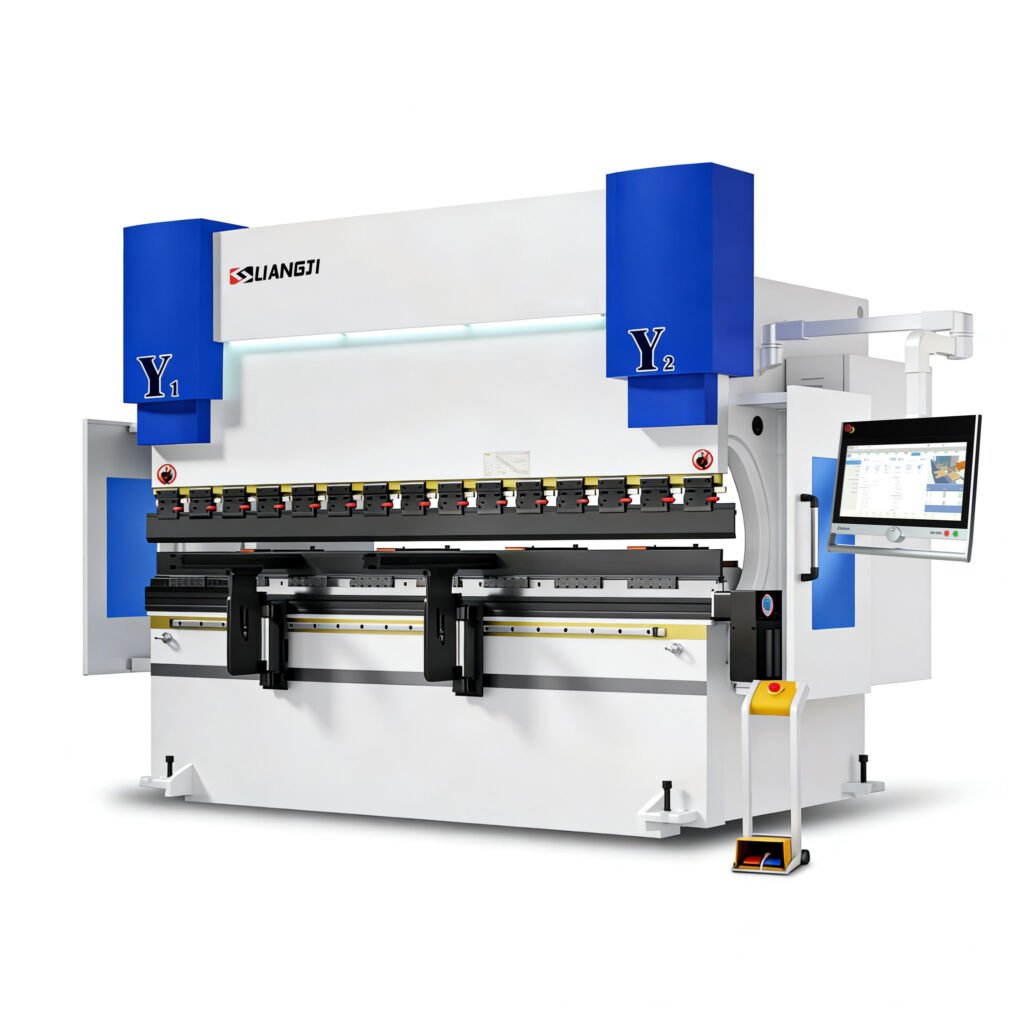
Taking the “Performance Series” Electro-Hydraulic Servo Press Brake from Liangji as an example, its key features include:
- High-Rigidity Frame Structure: The frame is optimized through Finite Element Analysis (FEA) and treated with vibration aging and high-temperature tempering to ensure long-term stability and resistance to deformation.
- CNC Crowning Compensation System: The mechanical crowning device automatically compensates for frame deflection during the bending process, ensuring a uniform angle across the entire bending length.
- Center-Drive Precision Backgauge System: Featuring a central ball screw drive combined with HIWIN/TBI linear guides, achieving a repeat positioning accuracy of ±0.02 mm.
- High-Speed Backgauge Movement: The X-axis reaches speeds up to 400 mm/s, significantly enhancing batch processing efficiency.
- Heavy-Duty Backgauge Construction: Utilizes high-strength backgauge beams (10 mm thickness, 200 mm width) to effectively reduce structural deformation during high-speed operation.
2. Torsion Bar Press Brake
The torsion bar press brake achieves synchronization of the left and right cylinders through a mechanical torsion bar structure. When one cylinder moves, the torsion bar drives the other side to move simultaneously, ensuring that the ram remains basically parallel during operation. This mechanical synchronization method does not require complex closed-loop control systems, making the structure simpler and more stable. Therefore, it is widely used in small and medium-sized sheet metal processing, mass production, and conventional precision machining scenarios.
Common advantages of torsion bar press brakes include:
- Simple Structure: Easy to maintain and service.
- Cost-Effective: Lower equipment and investment costs.
- Easy Operation: Relatively simple to learn and operate.
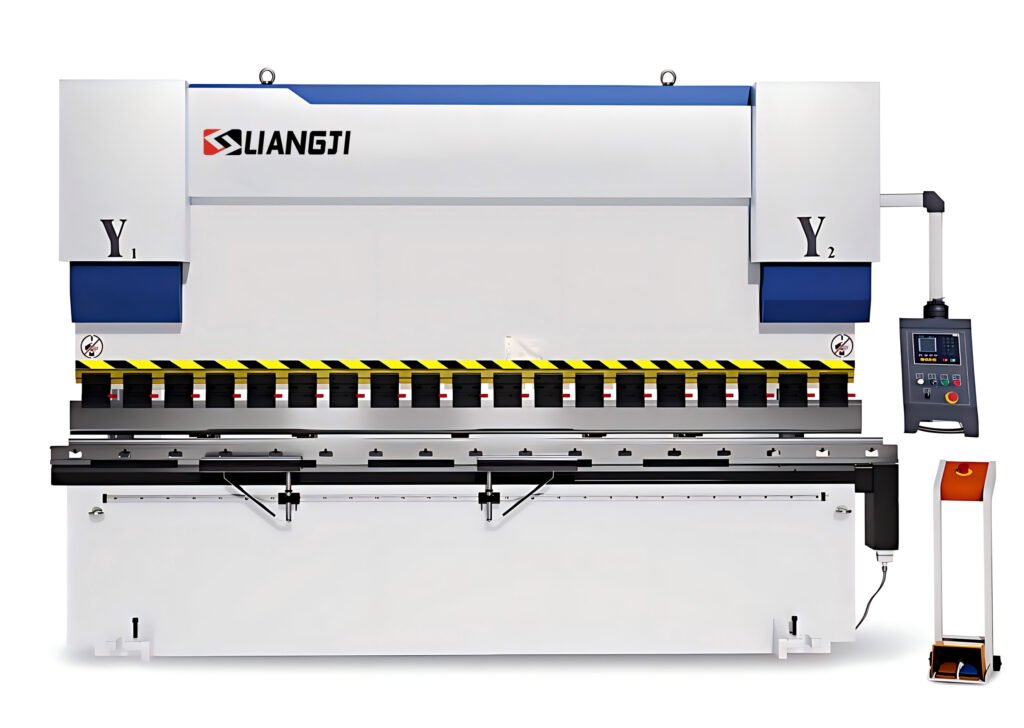
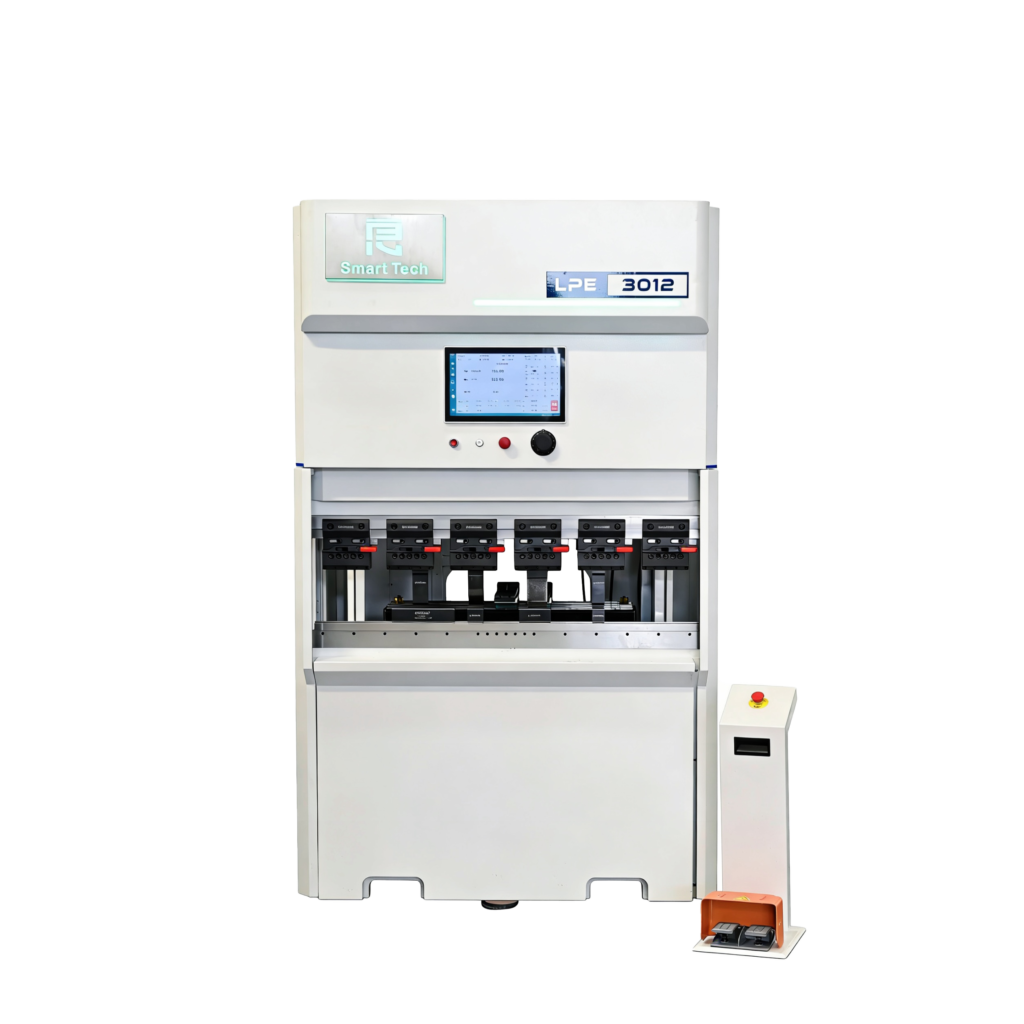
Taking the “Smart Series” Torsion Bar Press Brake from Liangji as an example, its key features include:
- Reinforced Torsion Bar Sync Structure: Utilizes a high-strength mechanical synchronization system to ensure stable cylinder movement. The reliable structure and simple maintenance are ideal for long-term, steady production.
- High-Rigidity Monoblock Frame Design: The frame is optimized via Finite Element Analysis (FEA); the ram undergoes overall annealing and precision machining to maintain stable accuracy even after long-term operation.
- High-Precision CNC System: Equipped with the E310P control system, supporting multi-axis control, angle programming, and automatic bending depth calculation. It can store up to 220 programs with 24 steps each, enhancing production efficiency and convenience.
- High-Precision Backgauge System: Features a ball screw and linear guide structure with adjustable fingers. It can be adjusted based on different sheet widths to ensure positioning accuracy, stability, and high-volume processing efficiency.
- High-Quality Core Components: Configured with international brands including Siemens main motors, Rexroth hydraulic valves, NOK seals, HIWIN guides, and Schneider electric components, significantly extending the machine’s service life and stability.
3. All Electric Press Brake
The all electric press brake directly drives the ram movement via servo motors, utilizing ball screws or belt transmission structures to achieve high-precision position control. With its high response speed and superior positioning accuracy, the pure electric press brake is particularly suitable for production environments with high demands for precision and efficiency, such as electronic equipment, precision manufacturing, and thin-sheet metal fabrication. However, its application in ultra-large tonnage or heavy-duty processing scenarios is relatively limited.
Common advantages of pure electric press brakes include:
- Higher Response Speed: Direct servo motor drive eliminates hydraulic delay, allowing for faster starting and stopping, ideal for high-frequency processing.
- Lower Energy Consumption: No hydraulic system is required, avoiding continuous standby energy consumption.
- Lower Maintenance Costs: Elimination of hydraulic oil, oil circuits, and valve groups reduces potential failures and maintenance issues.
- Higher Motion Precision: Achieves precise position control through the servo motor and ball screw system, ensuring more stable repeat positioning accuracy.
- Lower Noise & Eco-Friendly: Low noise levels and zero oil pollution make it more compliant with environmental protection requirements.
Taking the “iGreen Series” Pure Electric Press Brake from Liangji as an example, its key features include:
- Full Electric Servo Drive Structure: Employs a full electric drive system with no hydraulic oil, avoiding processing instability caused by oil temperature fluctuations and ensuring long-term consistency.
- Ultra-High Precision & Fast Response: Ram speeds can reach up to 200 mm/s, with repeat positioning accuracy up to ±0.003 mm, perfectly balancing efficiency and precision.
- Ultimate Stability: Eliminates thermal drift issues associated with hydraulic systems, maintaining stable accuracy even during long periods of continuous processing.
- Intelligent Bus Control System: Utilizes EtherCAT bus + dual-servo synchronous control to achieve microsecond-level synchronization accuracy and excellent anti-deflection (off-center loading) capability.
- Energy Saving & Low-Cost Operation: Saves up to 35% energy compared to traditional systems while operating at low noise levels (approx. 50 dB), significantly reducing operating costs.
4. Conclusion
We hope this summary helps you select the right machine based on your specific production requirements. Choosing the right equipment is key to optimizing your factory’s efficiency and precision.