
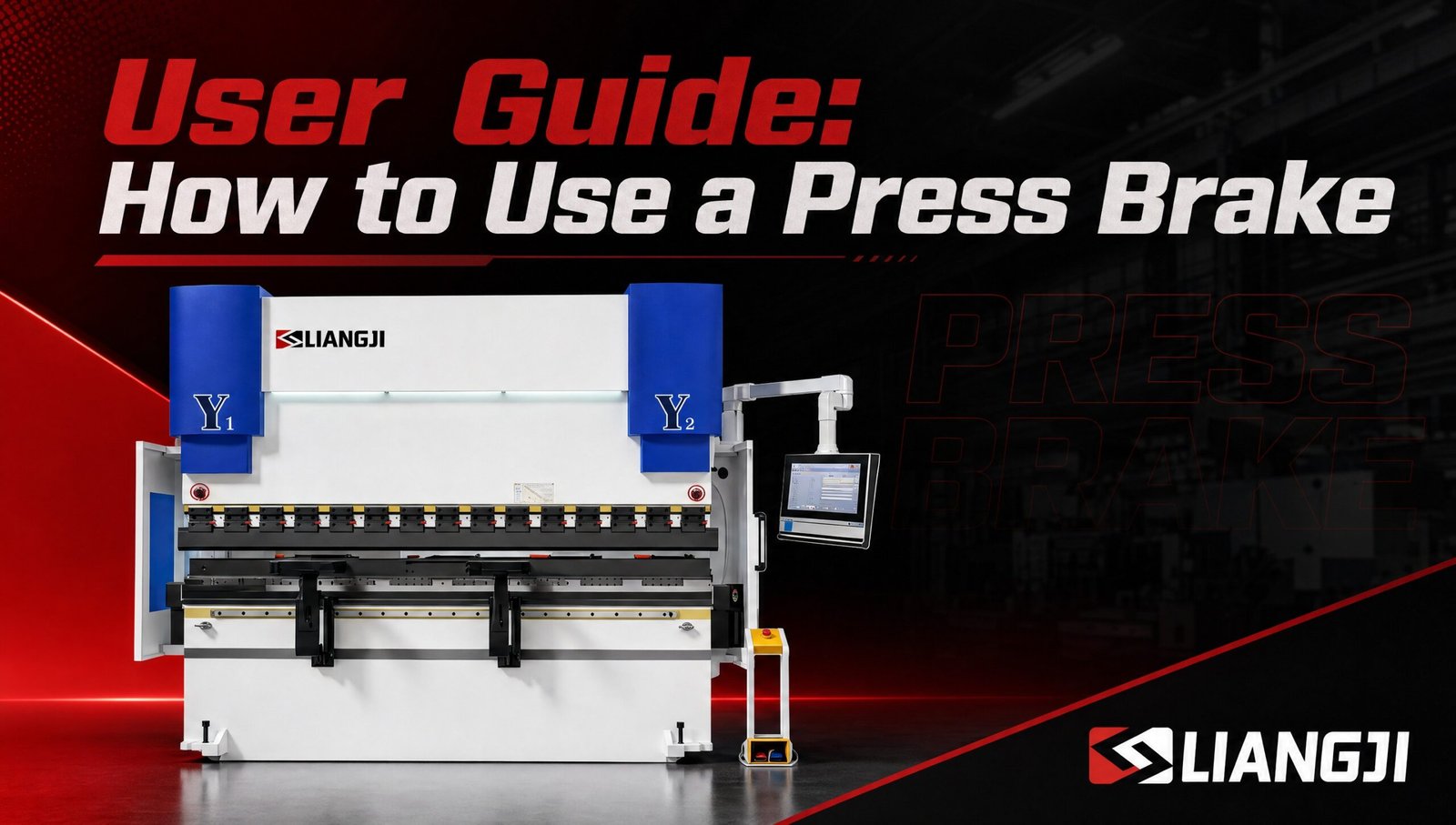
In the sheet metal processing industry, the press brake is one of the most essential pieces of equipment. Whether manufacturing simple L-shaped brackets or complex multi-angle components, operating the press brake correctly is crucial not only for product accuracy but also directly impacts production efficiency and the lifespan of the equipment.
This article will guide you from the ground up, providing a systematic understanding of the press brake’s operational workflow and key precautions.
I. Basic Working Principle of a Press Brake
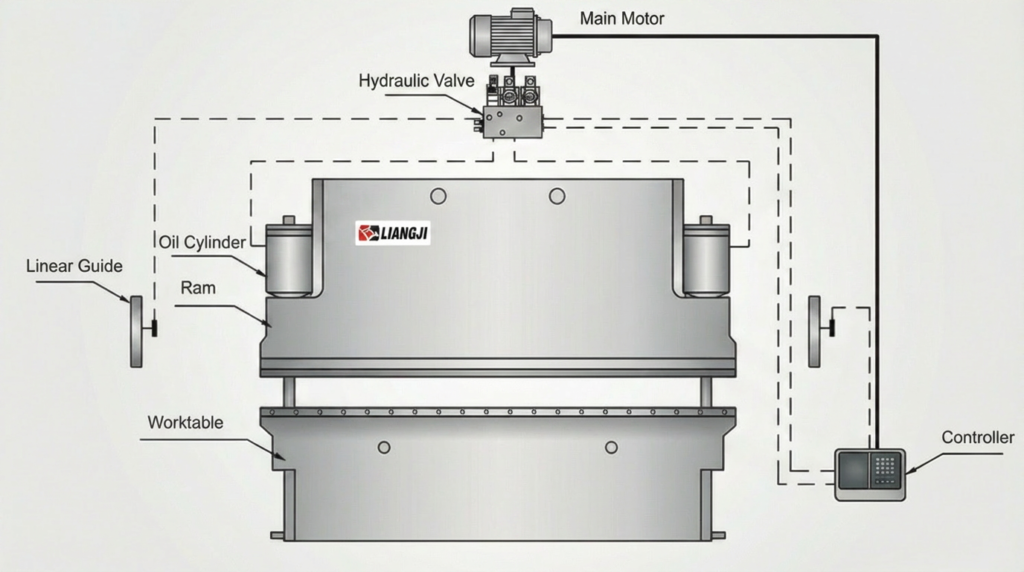
A press brake works by applying pressure to sheet metal through the relative motion between the upper punch and lower die (upper and lower molds), causing plastic deformation in the material to achieve the required bending angle.
Here is the complete translation with the main headings updated to Roman numerals:
In the sheet metal processing industry, the press brake is one of the most essential pieces of equipment. Whether manufacturing simple L-shaped brackets or complex multi-angle components, operating the press brake correctly is crucial not only for product accuracy but also directly impacts production efficiency and the lifespan of the equipment.
This article will guide you from the ground up, providing a systematic understanding of the press brake’s operational workflow and key precautions.
II. Preparation Before Using the Press Brake
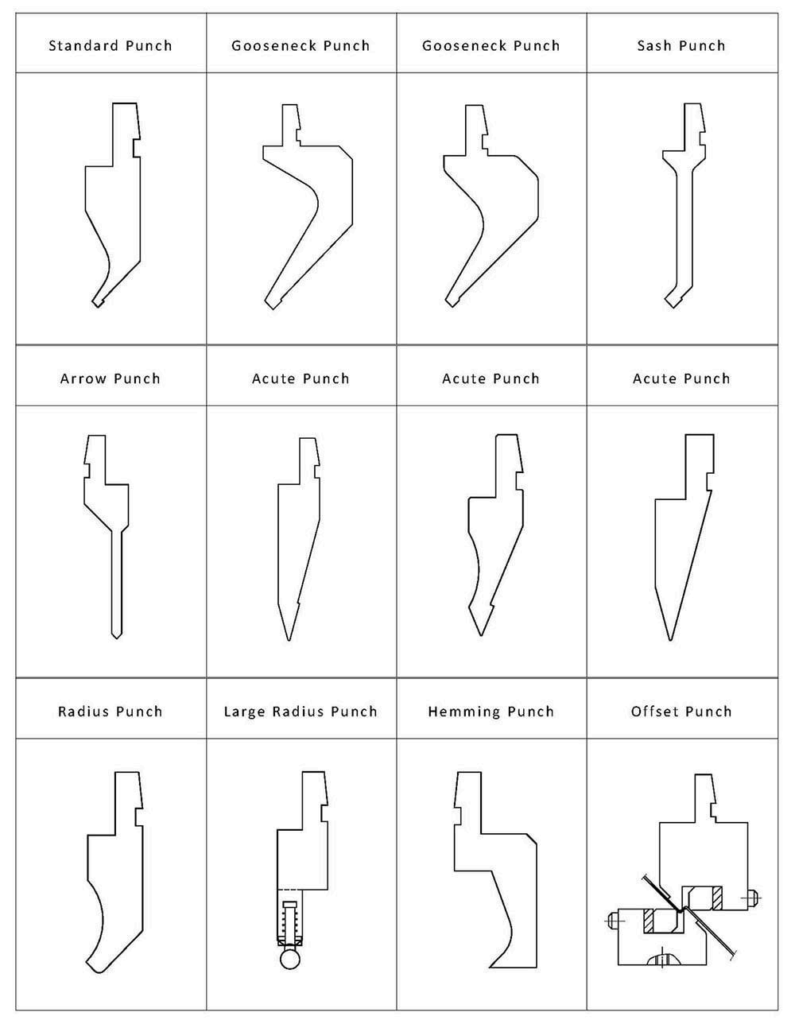
2.1 Selecting the Appropriate Tooling (Punches and Dies)
Tooling must be selected based on the following factors:
- Material thickness
- Material type (e.g., stainless steel, carbon steel, aluminum)
- Required bending angle
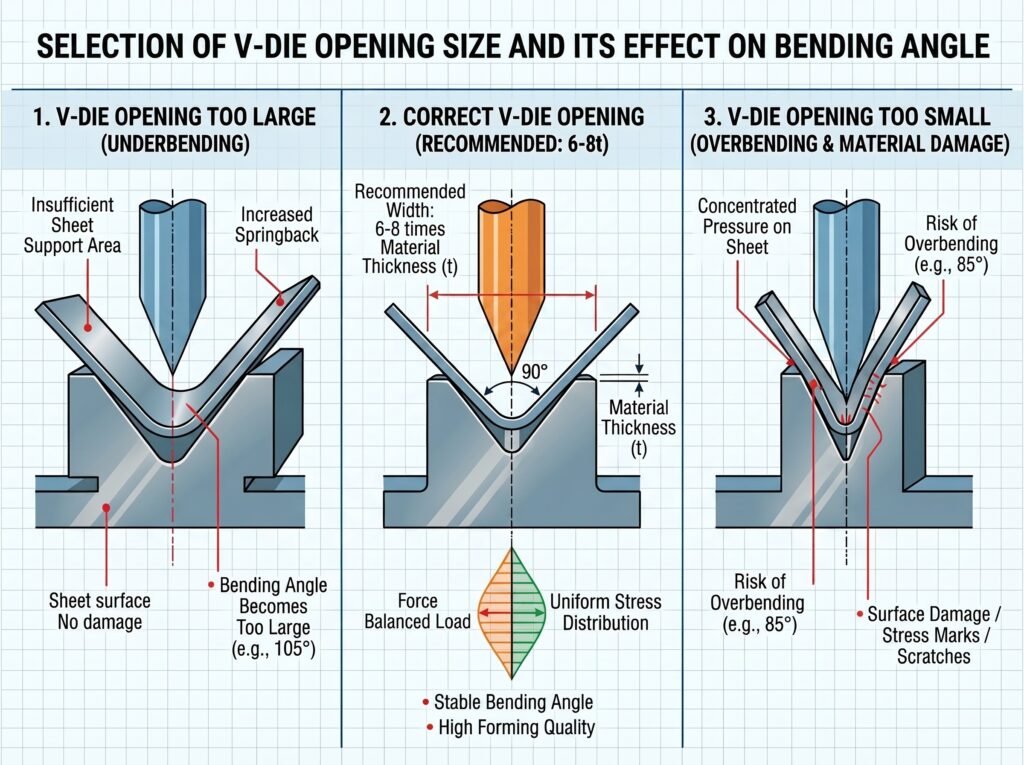
- V-die opening size: V-Die Opening ≈ Sheet Thickness × 8
2.2 Inspecting Equipment Status
Ensure the following:
- The hydraulic or servo system is operating normally.
- The tooling is securely installed and accurately centered.
- The backgauge position is accurate.
- The CNC system parameters are correct.
2.3 Setting Processing Parameters
- Bending angle
- Bending depth
- Backgauge adjustment: X-axis, R-axis
- Bending force (Tonnage, KN): P = (650 × S² × L) ÷ V
2.4 Bending Program Generation
- Input the sheet metal dimensions and thickness.
- Set the bending sequence.
- Define the position for each bending step.
Liangji’s CNC systems now support 2D/3D graphical modeling. After modeling, the system automatically calculates the optimal bending sequence, significantly reducing human error and the need for test bends, allowing even beginners to get up to speed quickly.
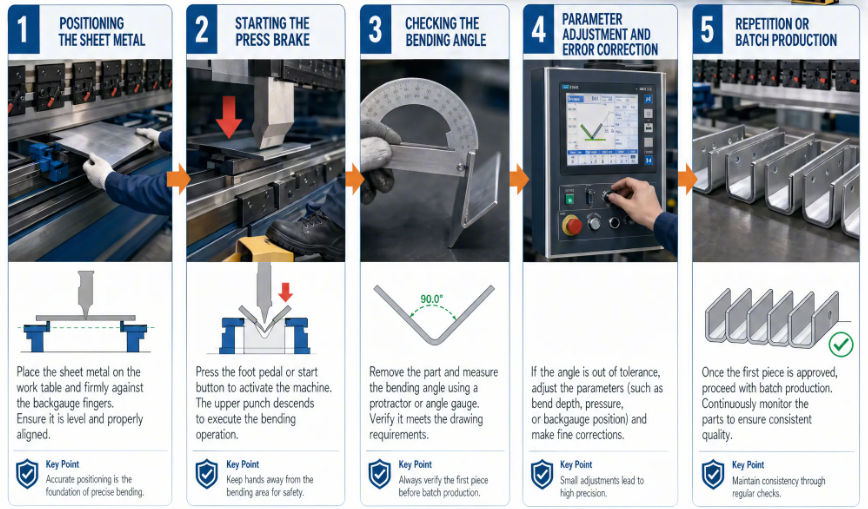
III. Operating Steps of the Press Brake
Step 1: Positioning the Sheet Metal
- Place the sheet metal firmly against the backgauge fingers.
- Keep the sheet level and avoid tilting.
- Ensure positioning accuracy.
Step 2: Starting the Press Brake
- Press the foot pedal or the start button.
- The upper punch descends to execute the bend.
- The ram returns to the top dead center after reaching the set depth.
Step 3: Checking the Bending Angle
- Measure the angle using a protractor or angle gauge.
- If there is a deviation, fine-tune the parameters.
- Apply crowning (deflection compensation) if necessary.
Step 4: Parameter Adjustment and Error Correction
- Angle not sharp enough (under-bent)➡ Increase the bending depth.
- Angle too sharp (over-bent) ➡ Decrease the bending depth.
- Incorrect bending position ➡ Adjust the backgauge coordinates.
Step 5: Repetition or Batch Production
- Once the first article is inspected and approved, you can proceed to the batch production stage.
IV. Operational Precautions
4.1 Safety Precautions
- Strictly prohibit reaching hands between the upper and lower tooling.
- Wear appropriate personal protective equipment (PPE) during operation.
- Always utilize two-hand control buttons or light curtain safety guards.
4.2 Accuracy Control
- Prevent the material from slipping during the bending process.
- Regularly calibrate the backgauge axes.
- Monitor the tooling for wear and tear.
4.3 Common Mistakes
- Incorrect tooling selection ➡ Leads to inaccurate angles.
- Insufficient tonnage ➡ Results in incomplete bending.
- V-die opening too large or too small ➡ Negatively affects the forming quality and part radius.