
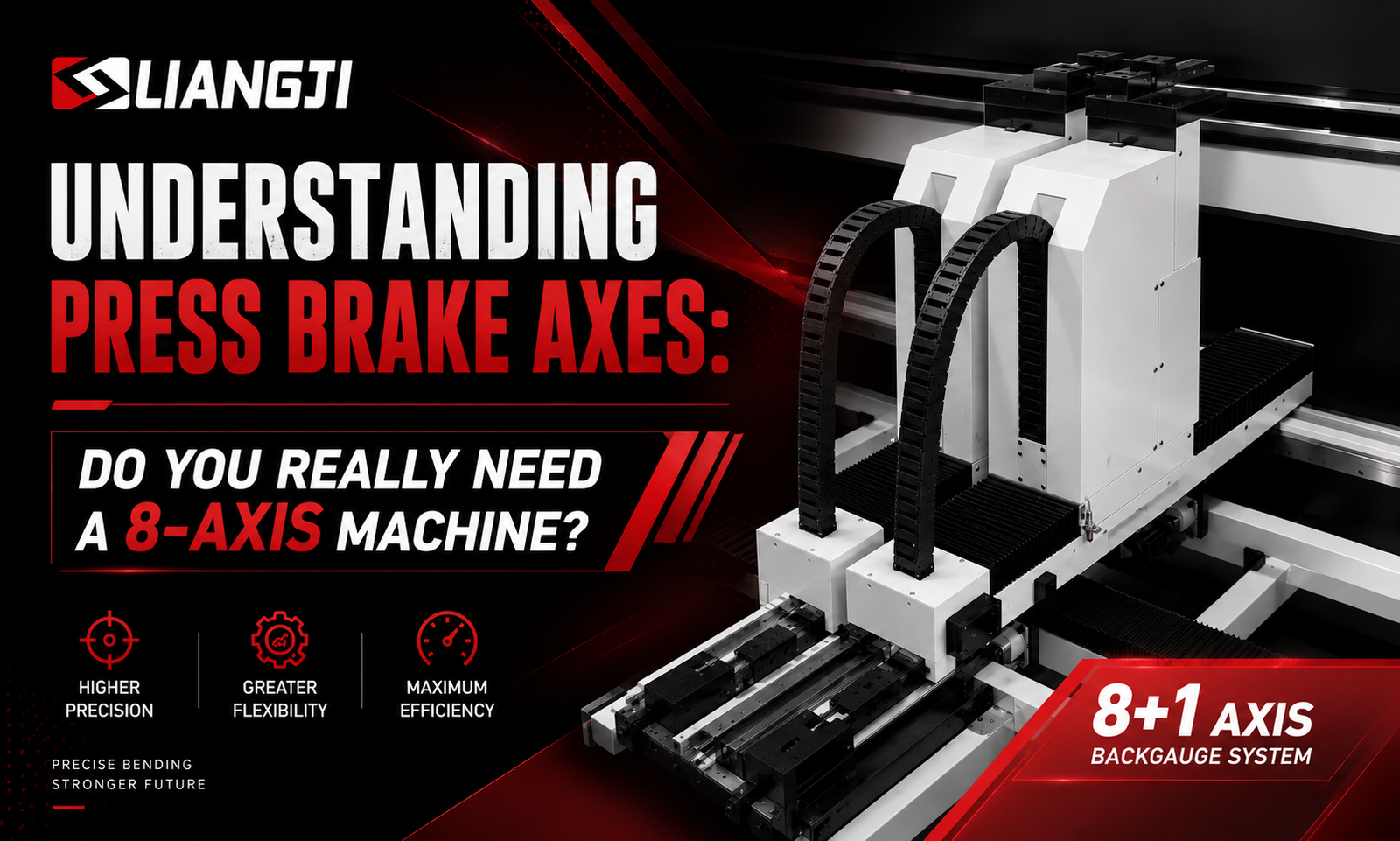
When purchasing a CNC press brake, many customers will come across terms such as:
- 4 Axis
- 6 Axis
- 8+1 Axis
However, many people still do not clearly understand:
- What do these axes actually control?
- Does having more axes always mean a better machine?
- Do I really need a 6-axis press brake?
In fact, the number of axes is more than just a numerical difference. In a CNC press brake, an “axis” refers to a movement position or direction controlled by the CNC system.
In this article, Liangji will introduce the functions of different press brake axes and explain the main differences between 4-axis and 6-axis CNC press brakes.
1. Understanding Common Press Brake Axes
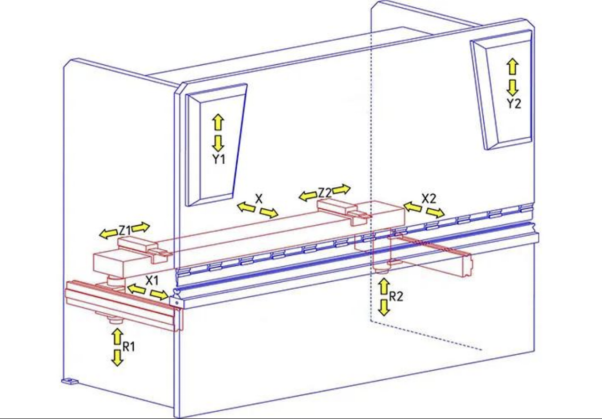
Y Axis
Controls the up-and-down movement of the left and right hydraulic cylinders (ram).
- Y1 controls the left side
- Y2 controls the right side
These two axes mainly determine:
- Ram synchronization
- Bending angle accuracy
- Off-center load resistance
X Axis
Controls the forward and backward movement of the backgauge.
Main functions:
- Controlling bending dimensions
- Improving repeat positioning accuracy
R Axis
Controls the vertical movement of the backgauge.
Commonly used for:
- Workpieces with different bending heights
- Multi-step bending
- Complex parts
Z1 / Z2 Axis
Controls the left and right movement of the backgauge fingers.
Commonly used for:
- Offset workpieces
- Multi-station bending
- Asymmetrical parts
Crowning Axis (V Axis)
Controls the crowning compensation system.
Main functions:
- Maintaining consistent bending angles across the entire bending line
- Compensating for deformation under load
2. 4+1 Axis vs 6+1 Axis vs 8+1 Axis: Which One Do You Need?
4+1 Axis CNC Press Brake
A 4+1 axis CNC press brake typically includes:
- Y1
- Y2
- X
- R
- V (Crowning Axis)
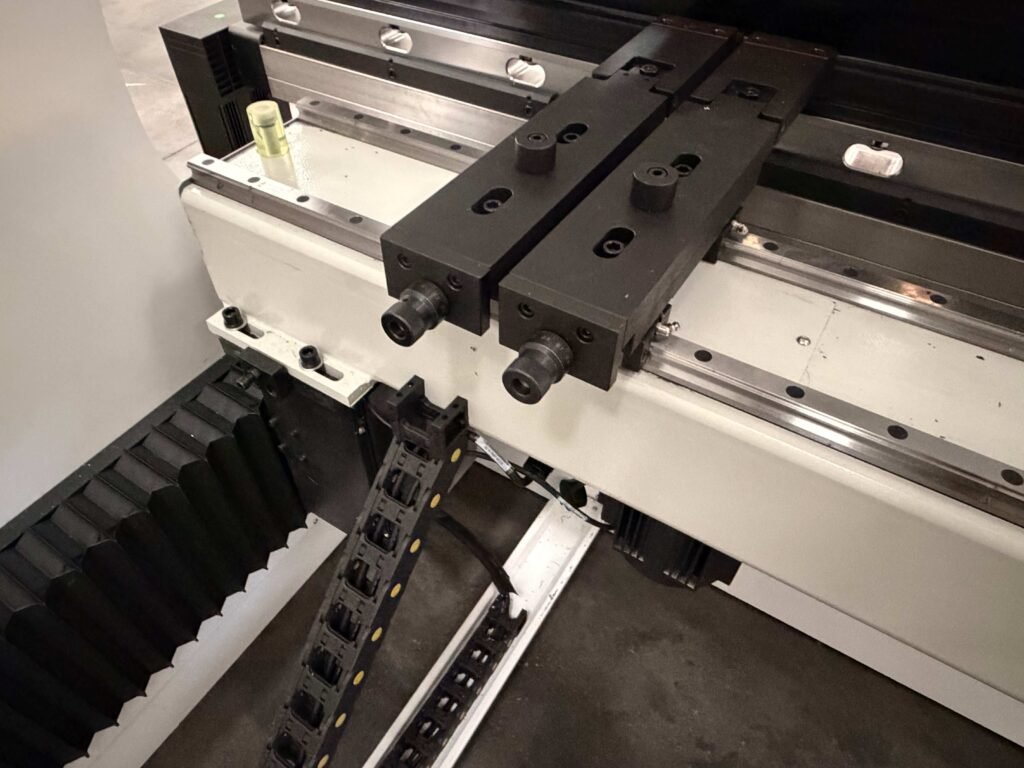
4+1 axis press brakes usually adopt a synchronized backgauge positioning structure, which is capable of meeting most conventional sheet metal processing requirements while maintaining good cost performance.
Suitable for:
- Simple product structures
- Relatively uniform workpiece sizes
- Limited budgets
- Conventional bending applications
Common application industries include:
- General metal fabrication
- Standard electrical cabinets
- Construction sheet metal
6+1 Axis CNC Press Brake
A 6+1 axis CNC press brake typically includes:
- Y1
- Y2
- X
- R
- Z1
- Z2
- V (Crowning Axis)
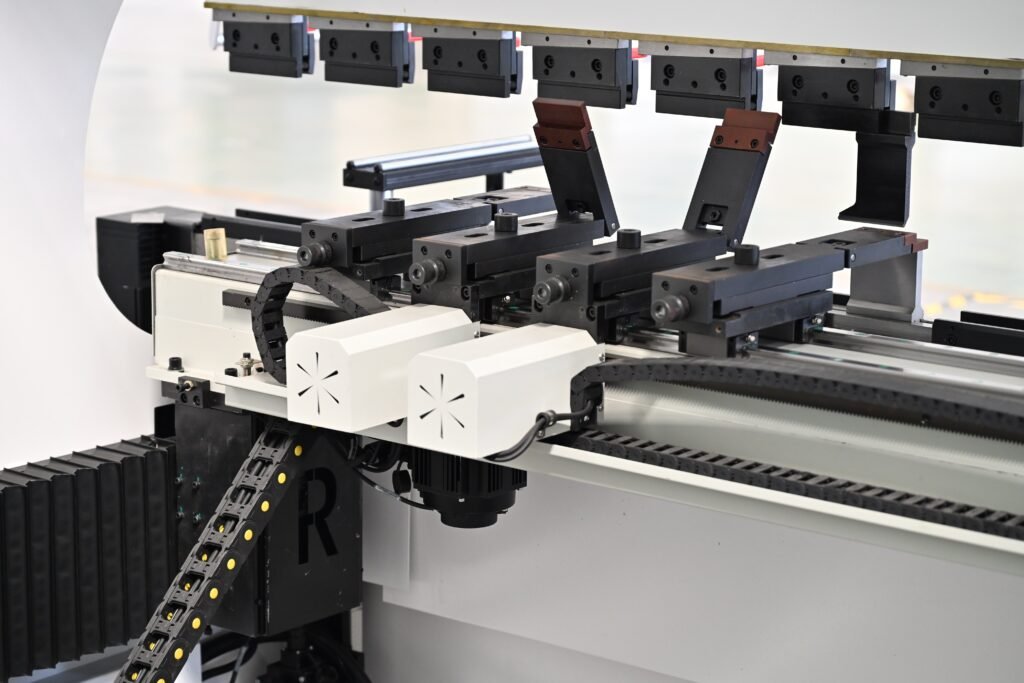
Compared with a 4+1 axis press brake, the left and right backgauge fingers of a 6+1 axis machine can move independently. During complex bending operations or multi-step bending, the system can automatically adjust positioning according to different bending sequences, reducing manual repositioning and improving both efficiency and consistency.
Suitable for:
- Complex workpieces
- Irregular parts
- Frequent product changes
- Higher automation requirements
- Production environments requiring high efficiency and consistency
Common application industries include:
- Elevator manufacturing
- Automotive components
- Precision sheet metal fabrication
- Complex stainless steel workpieces
8+1 Axis CNC Press Brake
An 8+1 axis CNC press brake typically includes:
- Y1
- Y2
- X
- R
- Z1
- Z2
- X1
- X2
- V (Crowning Axis)
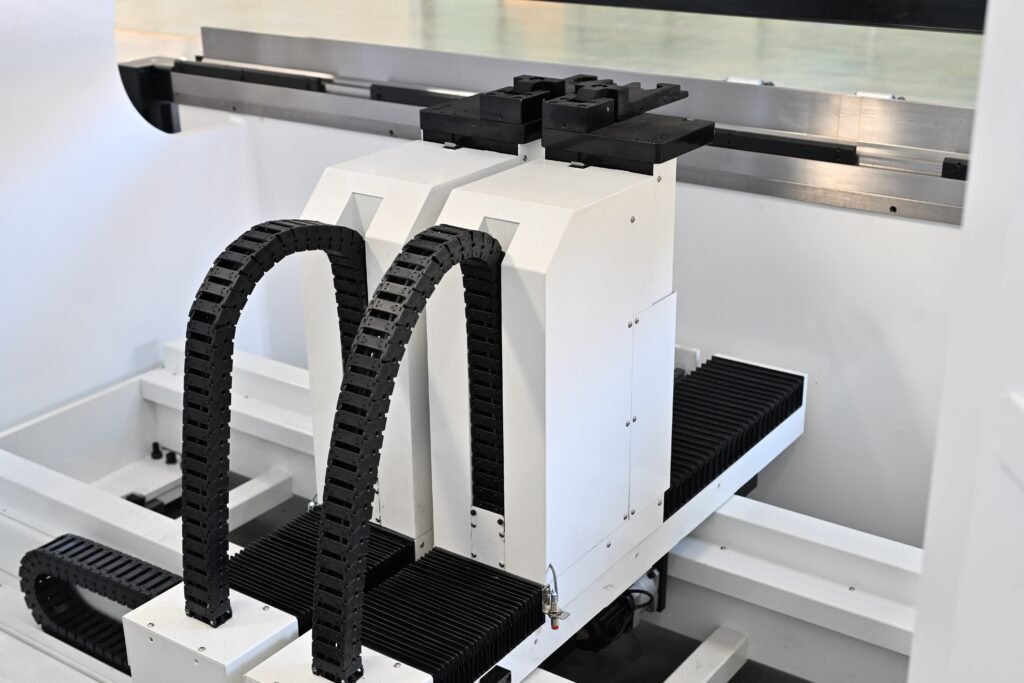
Compared with 6+1 axis configurations, 8+1 axis press brakes provide more flexible and precise backgauge control. Independent movement of multiple backgauge axes allows the machine to handle more complex bending sequences, reduce manual intervention, and improve automation capability.
Suitable for:
- Highly complex workpieces
- Multi-station bending operations
- High-precision sheet metal processing
- Automated or high-volume production environments
Common application industries include:
- Advanced industrial manufacturing industries
- Aerospace components
- High-end electrical cabinets
- Precision stainless steel fabrication
3. Conclusion
However, having more axes does not always mean a “better” machine. For many factories, choosing a press brake that truly matches their production requirements is often more important than simply pursuing a higher-axis configuration.
If you are unsure whether a 4-axis or 6-axis press brake is more suitable for your production needs, it is recommended to first evaluate the following factors:
- Material type and thickness
- Complexity of the bending process
- Annual production requirements
- Possible future expansion needs
At Liangji, we provide customized CNC press brake solutions based on different production requirements, helping customers choose machine configurations that better fit their actual manufacturing needs.