
Introduction
Choosing the correct press brake tonnage is one of the most important steps when purchasing a CNC sheet metal bending machine. The required bending force directly affects machine performance, bending accuracy, tooling life, and production efficiency.
For modern sheet metal manufacturers, a fully automatic electro-hydraulic CNC press brake provides an advanced solution by combining high bending capacity, precise hydraulic synchronization, intelligent CNC control, and automatic positioning systems.
However, selecting the right machine does not simply mean choosing the largest tonnage. The ideal press brake should match your material thickness, bending length, production requirements, and future expansion needs.
This guide explains how to calculate press brake tonnage and how to choose the right electro-hydraulic CNC press brake for your applications.
1. What Is Press Brake Tonnage?
Press brake tonnage refers to the maximum bending force generated by the machine during the bending process.
It is usually measured in:
- Ton
- kN (Kilonewton)
Conversion:
1 Ton ≈ 9.8 kN
For example:
- 100T press brake = approximately 1000 kN bending force
- 200T press brake = approximately 2000 kN bending force
A higher tonnage allows the machine to bend:
- Thicker metal sheets
- Higher strength materials
- Longer workpieces
However, excessive tonnage may increase:
- Equipment investment cost
- Energy consumption
- Tooling requirements
Therefore, correct tonnage selection is essential.
2. Factors Affecting Press Brake Tonnage Calculation
The required bending force depends on several factors.
2.1 Material Thickness
Material thickness is the most important factor affecting bending force.
Generally:
Thicker materials require higher bending tonnage.
Example:
- 3mm carbon steel → small CNC press brake
- 10mm carbon steel → medium/heavy duty press brake
- 20mm steel plate → high tonnage press brake
2.2 Bending Length
The bending length directly affects the required force.
For the same material thickness:
- 1 meter bending length requires less force
- 4 meter bending length requires much higher force
Example:
A 100T×3200mm CNC press brake means:
- Maximum bending force: 100 tons
- Maximum bending length: 3200mm
2.3 Material Type and Tensile Strength
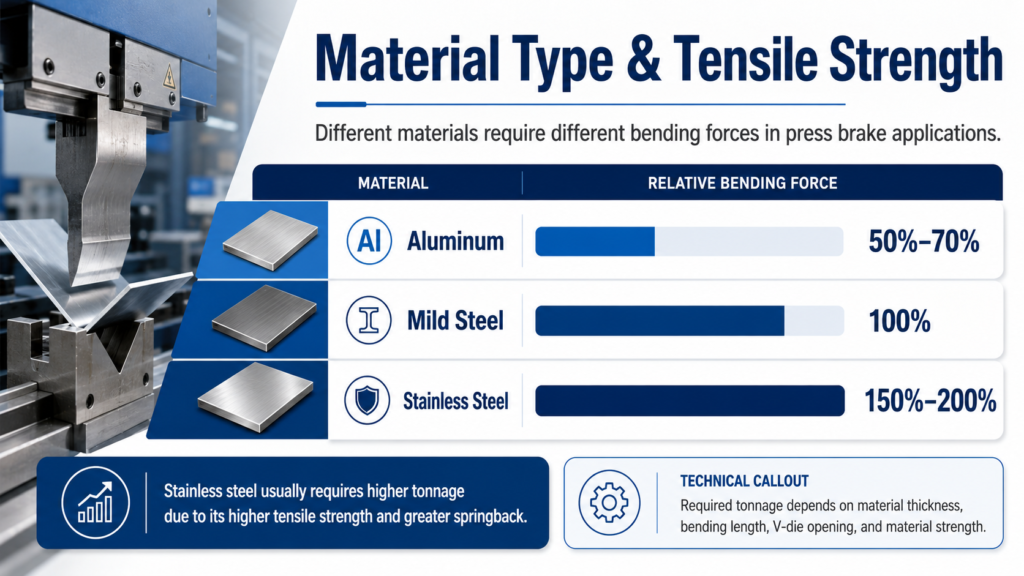
Different materials require different bending forces.
Typical comparison:
| Material | Relative Bending Force |
|---|---|
| Mild Steel | 100% |
| Stainless Steel | 150%-200% |
| Aluminum | 50%-70% |
Stainless steel requires higher tonnage because of its higher tensile strength and springback characteristics.
2.4 V-Die Opening
The lower die opening also affects bending force.
A common guideline:
V opening = 8 × material thickness
Example:
For a 6mm steel plate:
Recommended V opening:
6 × 8 = 48mm
A larger V opening:
- Reduces required bending force
- Reduces risk of overload
- Produces a larger inside radius
A smaller V opening:
- May increase tooling wear
- Requires higher force
Besides that, the lower die opening (V-opening) directly affects the required bending force and the final inside bend radius (R angle) of the workpiece.
Generally:
Larger V-opening → Larger inside radius → Lower bending force
Smaller V-opening → Smaller inside radius → Higher bending force
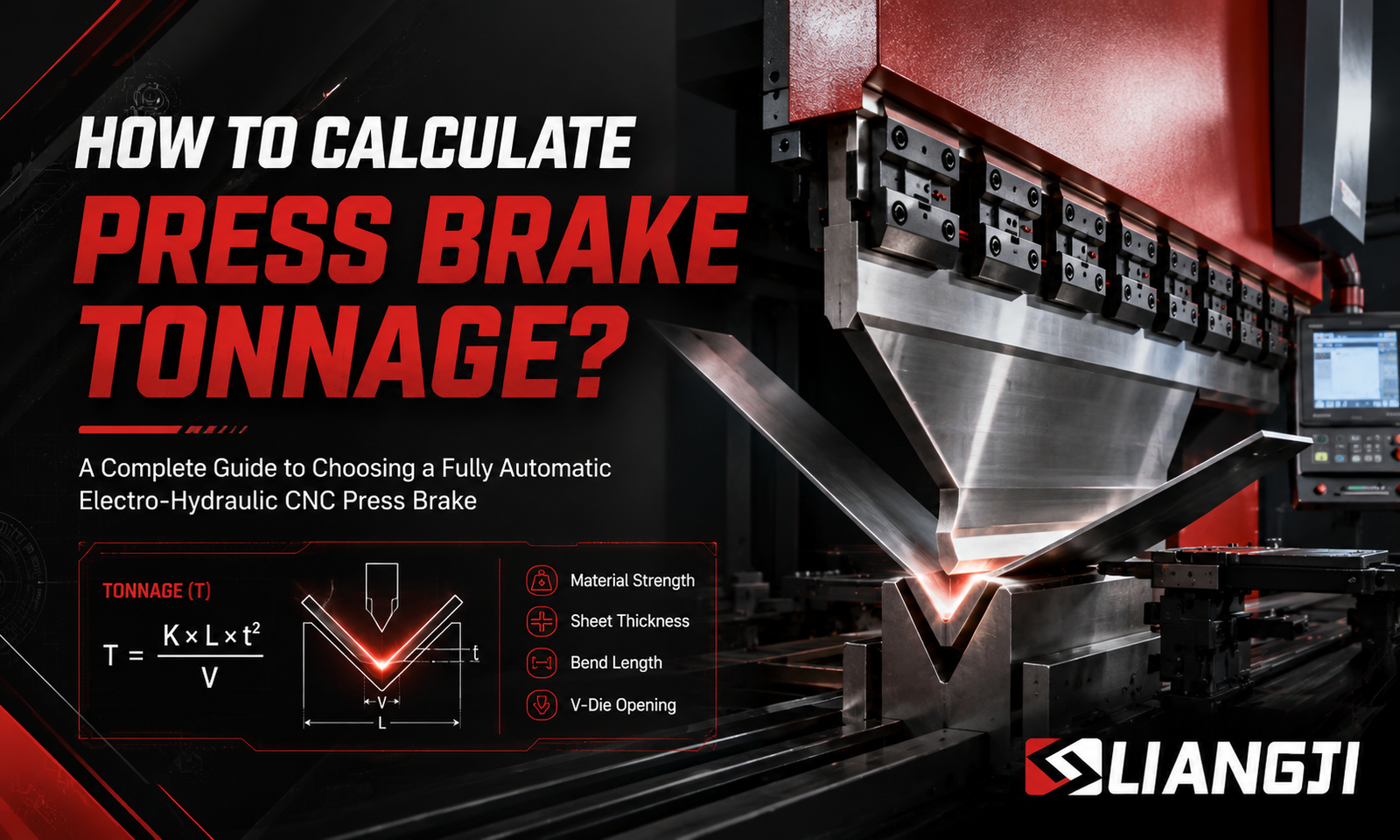
3. Press Brake Tonnage Calculation Formula
The commonly used calculation formula for air bending mild steel is:
P = 650 × S² × L / V
Where:
- P = Required bending force (kN)
- S = Material thickness (mm)
- L = Bending length (m)
- V = Lower die opening (mm)
Calculation Example
Material:
- Carbon steel
- Thickness: 6mm
- Bending length: 3m
- V opening: 50mm
Calculation:
P = 650 × 6² × 3 / 50
P ≈ 1404 kN
Convert to tons:
1404 ÷ 9.8 ≈ 143 tons
Therefore:
A 170-ton fully automatic electro-hydraulic CNC press brake would be a suitable choice.
4. Press Brake Tonnage Selection Guide
Small CNC Press Brake (40T-70T)
Suitable for:
- Electrical cabinets
- Small sheet metal parts
- Light fabrication
Advantages:
- Lower investment
- Compact design
- Easy operation
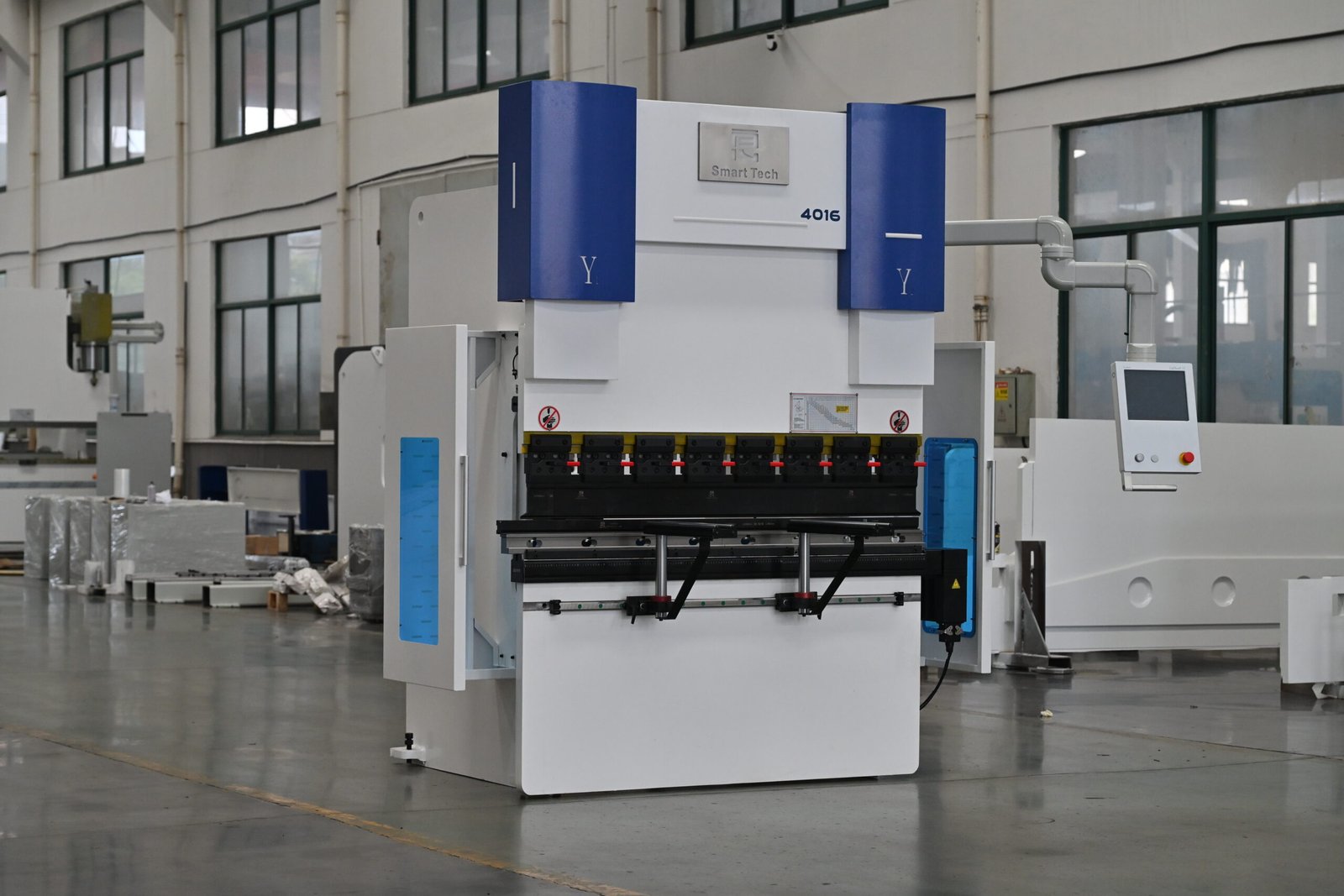
Medium Electro-Hydraulic CNC Press Brake (110T-250T)
This is the most common industrial range.
Applications:
- General fabrication
- Elevator components
- Automotive parts
- Machinery manufacturing
Advantages:
- Excellent flexibility
- Stable hydraulic performance
- Suitable for various materials
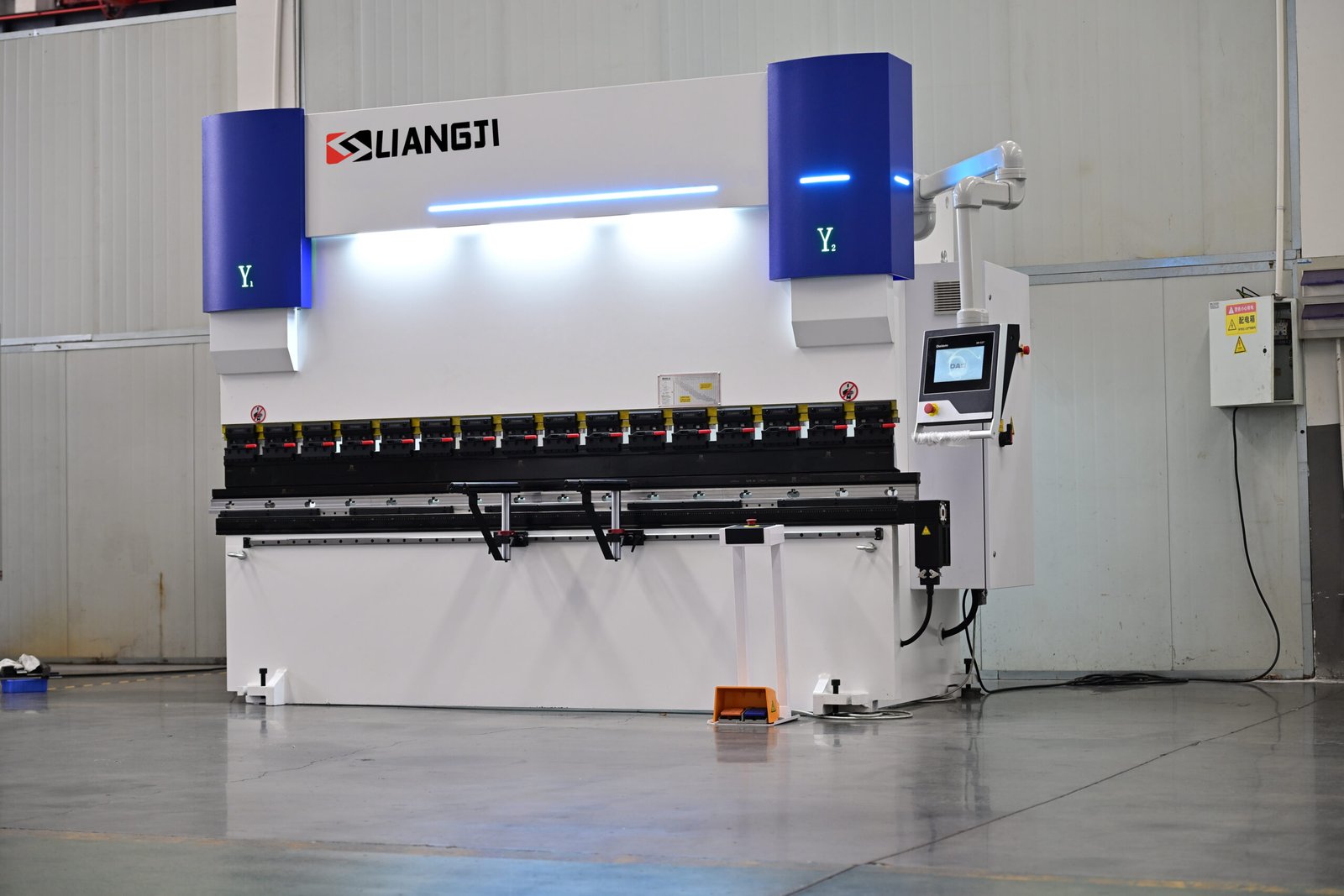
Heavy Duty CNC Press Brake (300T and Above)
Designed for:
- Heavy steel structures
- Large machinery parts
- Thick plates
Features:
- High rigidity frame
- Large bending capacity
- Long working length
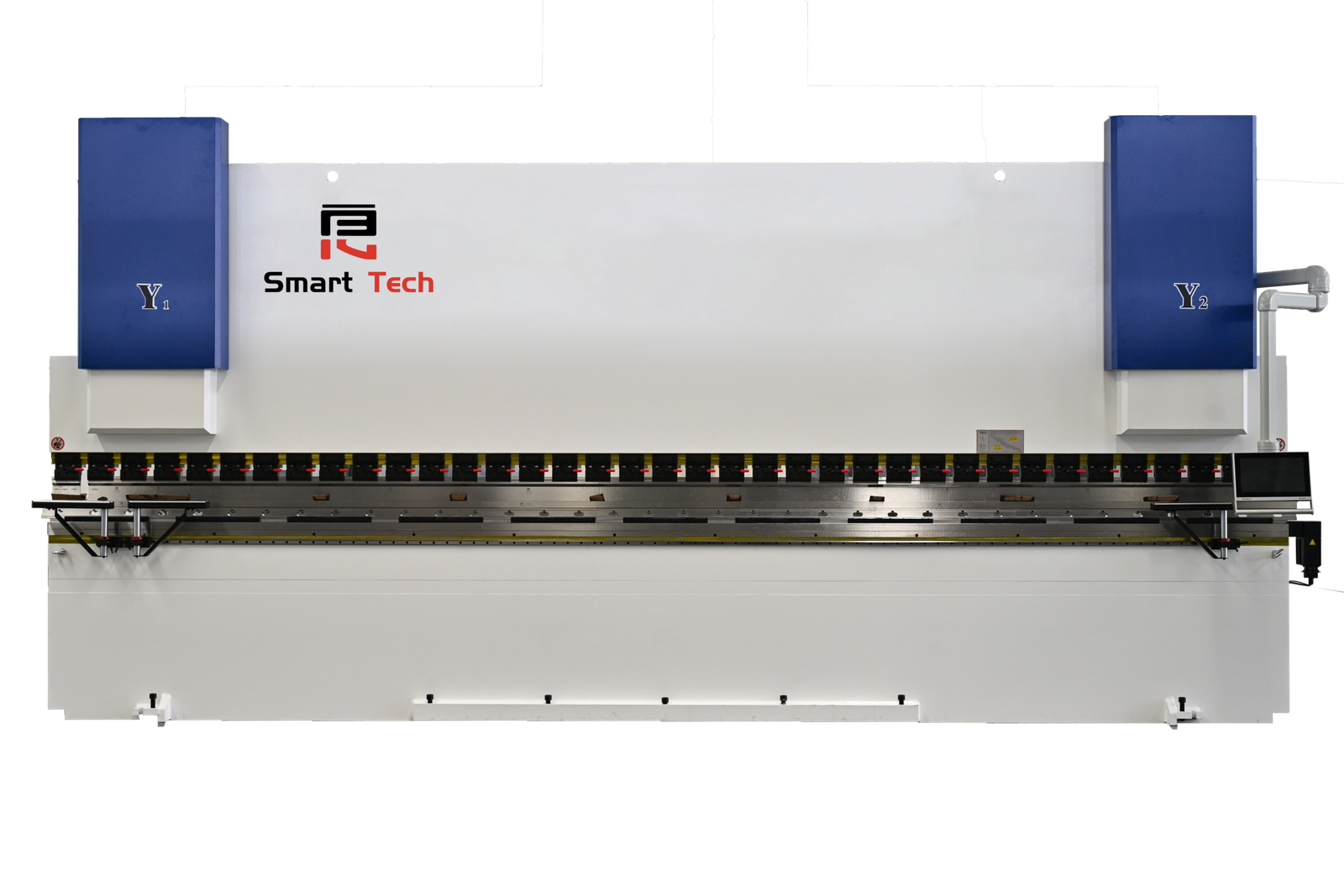
5. Why Choose a Fully Automatic Electro-Hydraulic CNC Press Brake?
After determining the required tonnage, manufacturers should also consider machine performance and automation level.
A modern fully automatic electro-hydraulic CNC press brake provides several advantages:
High Precision Hydraulic Synchronization
Independent Y1/Y2 hydraulic control ensures:
- Stable slider movement
- Accurate bending angles
- Consistent production quality
Intelligent CNC Control
Advanced CNC systems provide:
- Automatic bending calculation
- Graphic programming
- 3D simulation
- Multi-axis control
Automatic Back Gauge System
Servo-driven back gauges improve:
- Positioning accuracy
- Production efficiency
- Repeatability
Automatic Crowning Compensation
The CNC crowning system compensates for:
- Machine deflection
- Uneven bending angles
- Heavy load deformation
6. How to Select the Right Electro-Hydraulic CNC Press Brake?
Besides tonnage, buyers should evaluate:
Machine Frame Rigidity
A heavy-duty welded frame provides:
- Better stability
- Lower deformation
- Longer service life
CNC Controller
Common options include:
- Delem
- Cybelec
- Techmation
Axis Configuration
Different applications require different CNC axes:
- 4-axis: Standard bending applications
- 6-axis: Complex parts and flexible production
- 8+1 axis: High automation and productivity
Production Requirements
High-volume production may require:
- Automatic programming
- Robot integration
- Smart factory connectio
7. Common Mistakes When Choosing Press Brake Tonnage
Choosing Too Small a Machine
Problems:
- Machine overload
- Reduced accuracy
- Shorter service life
Choosing Excessive Tonnage
Problems:
- Higher purchase cost
- Higher energy consumption
- Unnecessary capacity
Ignoring Future Production Needs
A suitable machine should not only meet today’s requirements but also support future growth.
8. LIANGJI Fully Automatic Electro-Hydraulic CNC Press Brake Solutions
LIANGJI provides customized electro-hydraulic CNC press brake solutions for different industries and production requirements.
Our machines feature:
- Heavy-duty welded frame structure
- High precision closed-loop control
- Servo hydraulic technology
- Multi-axis CNC back gauge
- Automatic crowning system
- Advanced CNC controllers
From compact CNC bending machines to heavy-duty industrial press brakes, LIANGJI helps customers select the right solution based on material, thickness, bending length, and production goals.
Conclusion
Calculating press brake tonnage is the first step toward selecting the right CNC bending machine. By considering material thickness, bending length, material strength, and V-die opening, manufacturers can choose the optimal machine capacity.
A fully automatic electro-hydraulic CNC press brake not only provides sufficient bending force but also delivers higher accuracy, efficiency, and long-term production value.